
Nobody plans to fall at night. It just happens, the room is dark, the body is half-asleep, and one wrong step is all it takes.
For older adults, getting up in the middle of the night is genuinely one of the riskiest parts of the day. Blood pressure drops when you go from lying to standing. Medication effects peak at night. And without proper lighting or support, even a familiar bedroom can become a hazard.
The fix doesn’t have to be complicated. Here’s what actually belongs next to the bed.
Why Nighttime Falls Are a Separate Problem
Daytime falls and nighttime falls have different causes. At night, several factors stack up at once:
- Poor lighting makes obstacles invisible, even for people with normal vision
- Waking from deep sleep causes grogginess and reduced spatial awareness
- Orthostatic hypotension, a sudden blood pressure drop when standing, is more pronounced after lying down for hours
- Medications like sedatives, blood pressure drugs, and some antidepressants peak in effect at night
- Conditions like dementia and sundowning increase nighttime confusion and disorientation
Environmental factors, poor lighting, uneven surfaces, and slippery floors account for 30 to 50 percent of falls in older adults. The bedroom and the path to the bathroom are ground zero for these risks.
1. Motion-Activated Nightlight
This is the simplest, cheapest, and most consistently recommended bedside addition. A motion-activated nightlight turns on the moment someone shifts or sits up, before their feet even hit the floor.
It eliminates the delay of searching for a lamp switch in the dark, which is when missteps most commonly happen. Place one directly beside the bed, and another along the path to the bathroom.
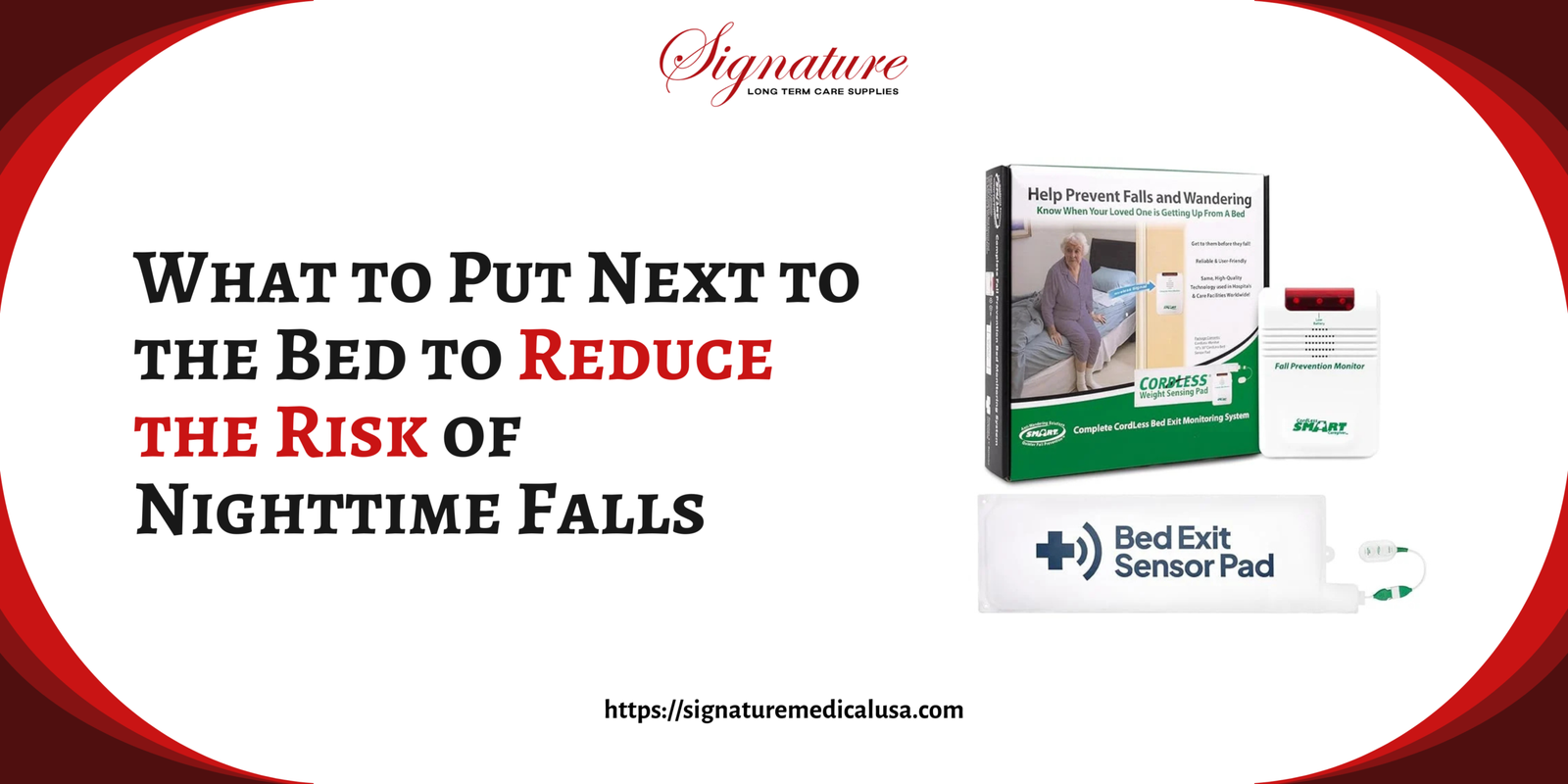
2. Smart Cordless Bed Sensor Pad
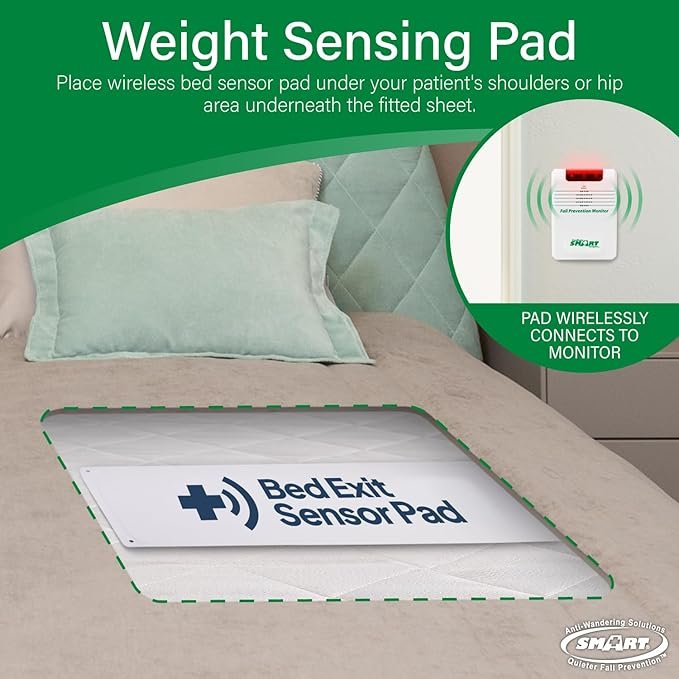
A smart cordless bed sensor pad is a pressure-sensitive pad placed discreetly under the fitted sheet, typically beneath the hips or shoulder blades. The moment weight is lifted from the pad, it sends a wireless signal to a monitor or caregiver alert device.
Key things to know
- The alarm sounds at the caregiver’s monitor, not in the patient’s room, so the senior isn’t startled, which itself can trigger a fall
- Cordless versions eliminate the trip hazard created by wired systems
- Placing the pad under the shoulder blades gives an earlier alert, the system triggers when the person begins to sit up, not after they’re already standing
- Most systems have a wireless range of up to 300 feet, making them practical for home use across multiple rooms
The pad detects movement. The monitor alerts the caregiver. Together, they help prevent a fall before it happens.
3. Floor Mat Alarm
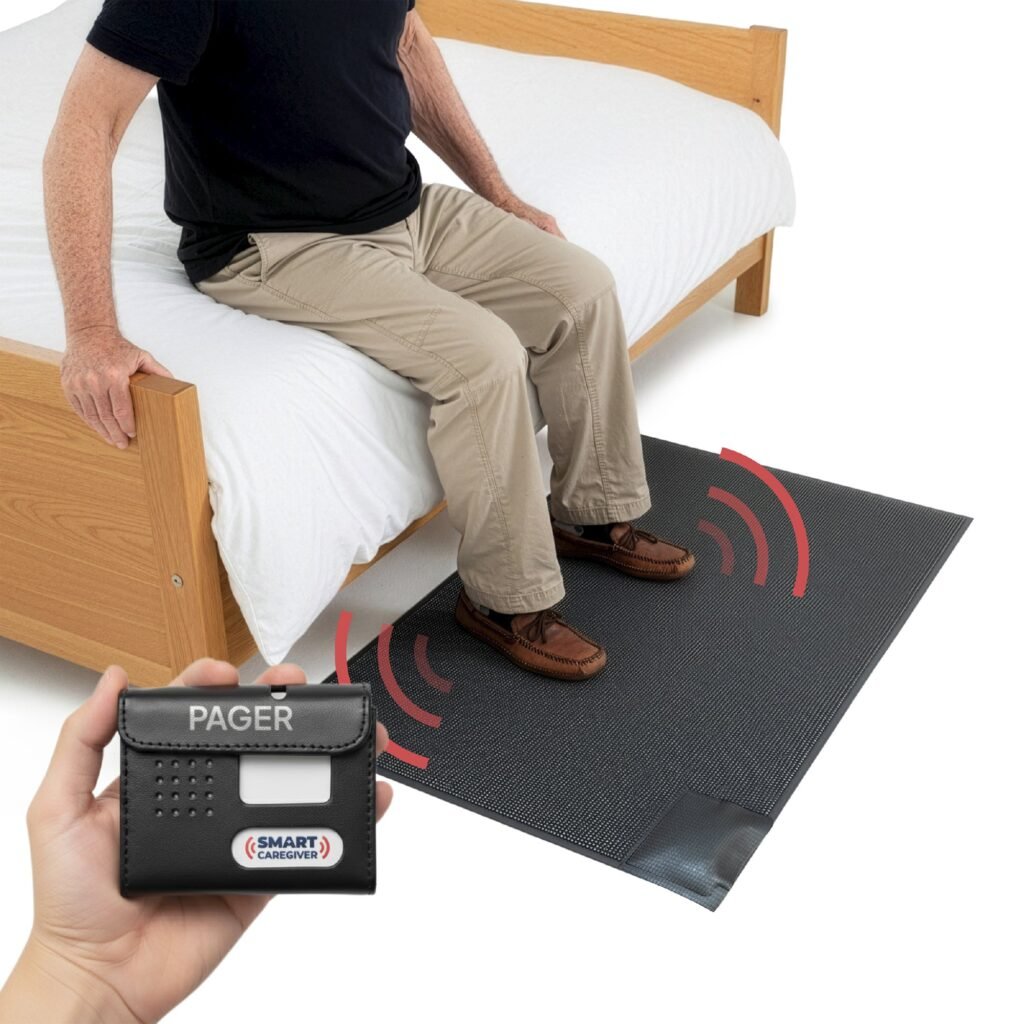
A floor mat alarm is a pressure-sensitive mat placed on the floor directly beside the bed. When someone steps onto it, it triggers an alert to the caregiver’s monitor.
It works differently from a bed sensor pad, it catches the moment feet touch the floor rather than when weight leaves the mattress. This makes it a useful option for:
- Seniors who move around a lot in their sleep and trigger false alarms on bed pads
- People with dementia who may attempt to get up quickly without warning
- Situations where caregiver response time is slightly longer and the bedside alert provides a final safety catch
Doorway placement works too, helpful if your loved one wanders at night.
4. Essentials Within Arm’s Reach
Reaching for items in the dark is a surprisingly common fall trigger. Keep these within arm’s length of the bed, not across the room.
- Glasses (without them, everything is a hazard)
- Phone or emergency call button
- A glass of water
- Any walking aid used during the day, cane or walker should be at the bedside, not across the room
If a bedside commode is appropriate for the individual, placing one nearby eliminates the highest-risk journey in the home, the nighttime trip to the bathroom.
5. What to Remove From the Bedside Area
What’s not there matters as much as what is. The standing zone beside the bed should be clear of:
- Loose cords from lamps or chargers secure them away from foot traffic
- Shoes, slippers, or any object on the floor that could be stepped on in the dark
- Rugs without non-slip backing, these are among the most common trip hazards
- Furniture positioned too close to the bed exit point
Choosing the Right Fall Prevention Products
Not every product suits every situation. A few practical considerations.
- Wired vs. cordless – Cordless systems eliminate a genuine trip hazard. For home use, cordless is almost always the better choice.
- Bed pad vs. floor mat – If the person moves frequently in sleep, start with a floor mat alarm to reduce false triggers. For early alerts, the bed sensor pad placed at the shoulder blades gives more lead time.
- Volume and alarm placement – The alarm should sound where the caregiver is, not in the room. This avoids startling the person and causing a panic-triggered fall.
- Ease of cleaning – Look for waterproof, latex-free pads, especially if incontinence is a factor.
Why the Right Setup Changes Everything
Nighttime falls don’t announce themselves. That’s the reality caregivers live with. . And it’s exactly why the right products, placed in the right spots, matter more than most people realize.
At Signature LTC Supplies, we stock fall prevention products that are practical, dependable, and built for actual home care situations, not just hospital settings. From smart cordless bed sensor pads to floor mat alarms, everything we carry is selected with one goal in mind: giving caregivers a real heads-up before a fall happens.
Because reacting after the fact isn’t good enough. You deserve tools that work while you sleep, so your loved one can move safely even when you’re not in the room.