

3 a.m. is when most falls happen. Not because caregivers are careless, but because that’s when everyone’s asleep, including the person who just decided to get up and walk to the bathroom alone.
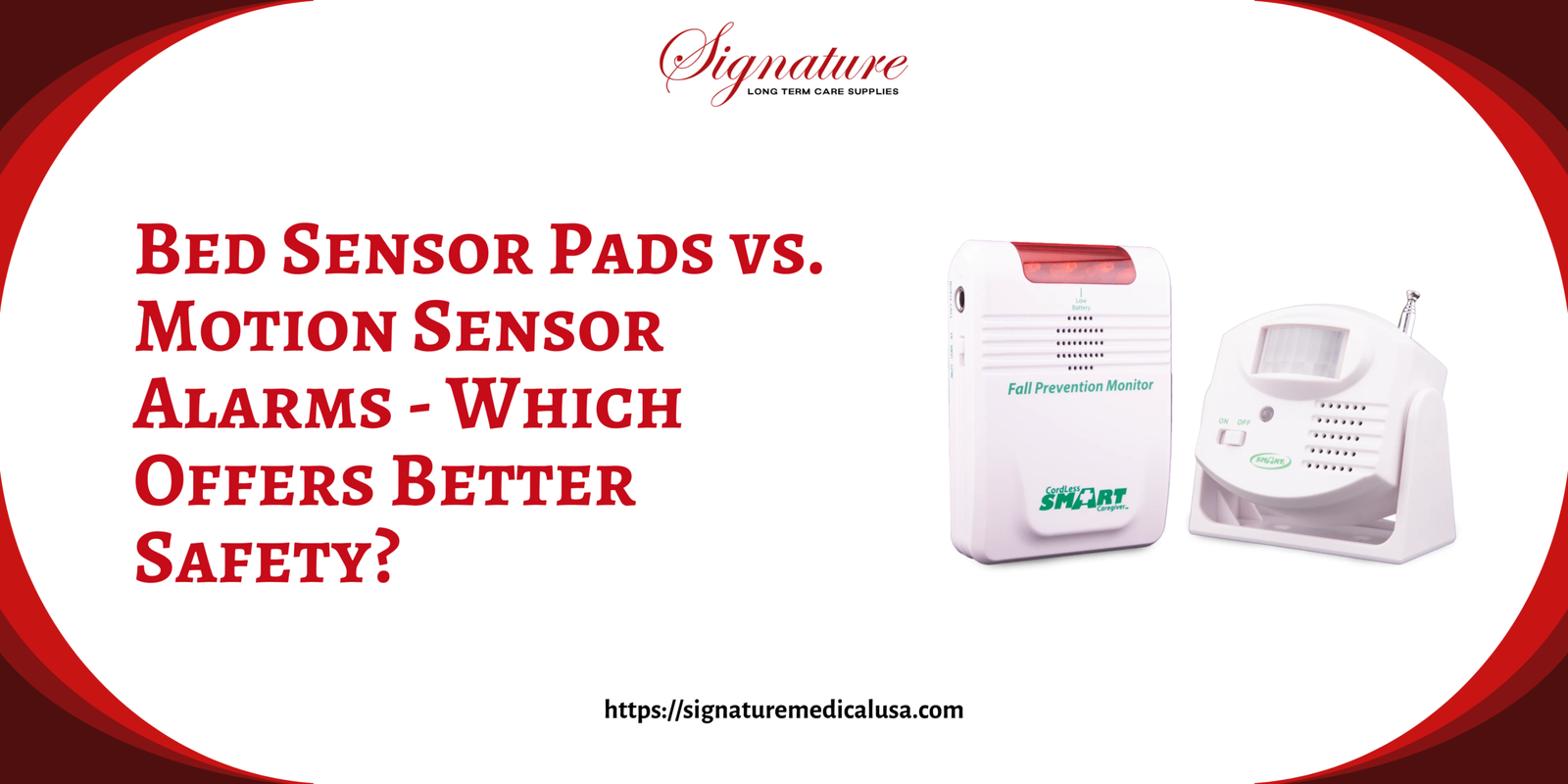
This is exactly why bed exit alarms exist. But once you start shopping for one, you hit a fork in the road, pressure pads or motion sensors? They both promise to catch a fall before it happens, yet they work in completely different ways. Here’s how to tell them apart.
How a Bed Sensor Pad Actually Works
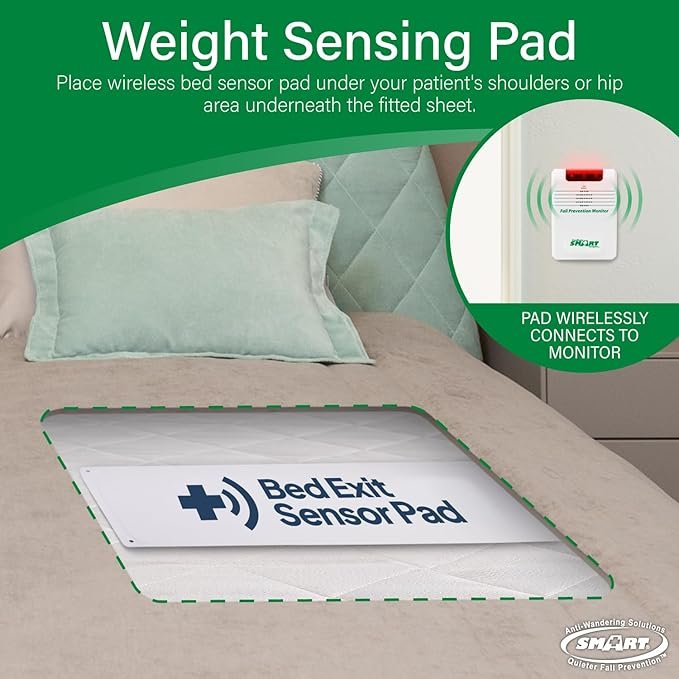
A smart cordless bed sensor pad sits under the mattress sheet, right where the person’s weight normally rests. It’s a pressure-sensitive pad, simple in concept, but effective in practice.
Here’s the mechanism
- Weight on the pad keeps the circuit “closed”
- The moment that weight lifts, someone sitting up, shifting to the edge, or standing, the circuit breaks
- A signal fires instantly to a receiver or pager, alerting the caregiver
Because it reacts to weight leaving the pad rather than movement in the room, it tends to catch the very first moment someone starts to get up, often before their feet even touch the floor. That early warning window is the whole point.
A cordless alert monitor with bed pad setup takes this a step further by removing wires entirely, which matters more than it sounds. Cords tangle, get pulled loose, or become a tripping hazard themselves, not ideal in a room where fall prevention is the goal.
How a Motion Sensor Alarm Works
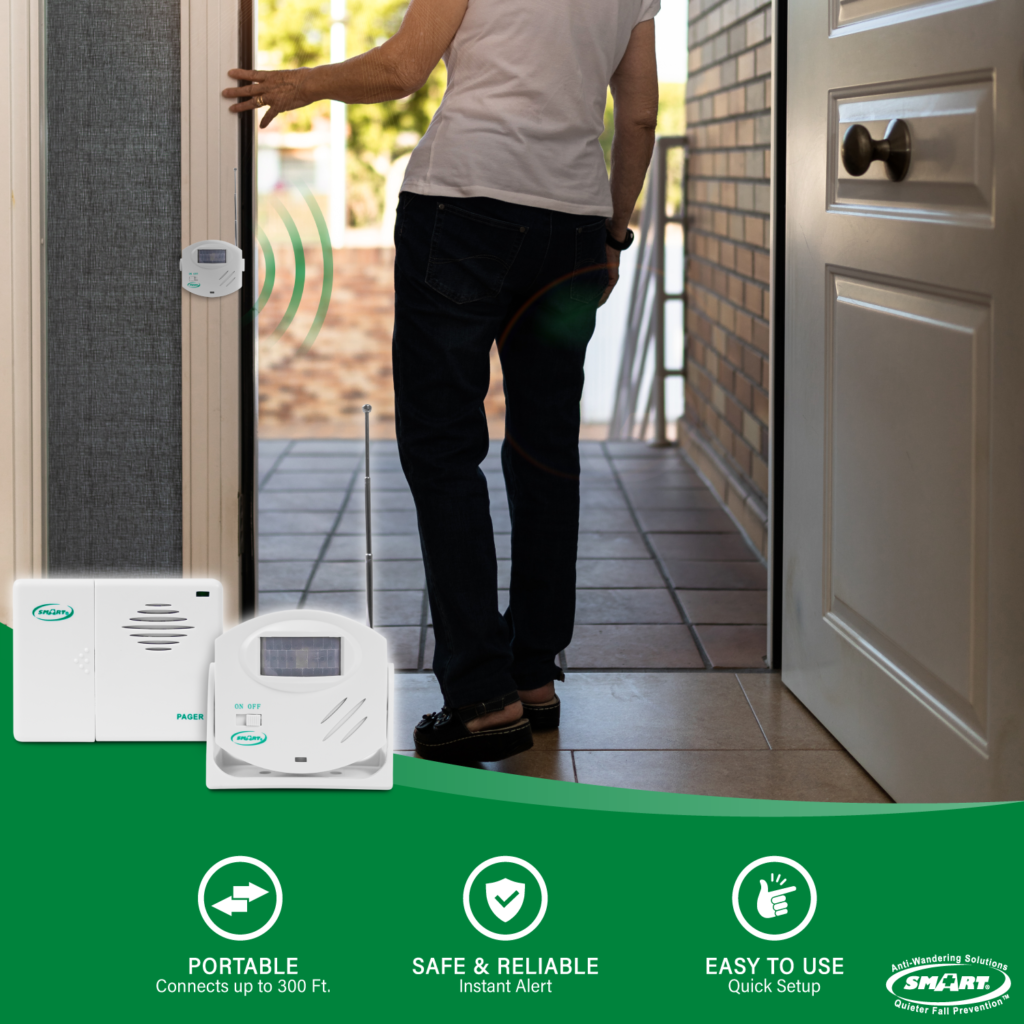
A motion sensor alarm takes a different approach entirely. Instead of detecting weight, it creates an invisible detection field, usually infrared around the bed or a specific zone in the room. Break that field, and the alarm sounds.
A few things worth knowing
- Some units mount on the wall or bed frame and don’t touch the mattress at all
- A wireless motion sensor alarm can often be repositioned to cover a doorway, a chair, or a floor area near the bed, not just the bed itself
- They tend to cost more than basic pressure pads, and setup is a bit more involved
The tradeoff is false alarms. An arm hanging off the bed, a pet walking by, or someone simply rolling over can trigger the field, which, over time, leads to alarm fatigue for caregivers who stop responding as urgently.
Which Actually Offers Better Safety?
| Factor | Bed Sensor Pad | Motion Sensor Alarm |
| Detects | Weight leaving the pad | Movement breaking a field |
| Early warning | Very early, before standing | Often after movement begins |
| False alarms | Lower, if positioned correctly | Higher, especially with pets or restless sleepers |
| Setup | Simple, place under sheet | Requires field calibration |
| Flexibility | Bed-specific | Can cover doorways, chairs, floor zones |
| Best suited for | Nighttime bed-exit risk, dementia patients | Rooms needing broader area coverage |
Which One Should You Actually Choose?
It comes down to the specific risk you’re managing, not which technology sounds more advanced.
- Choose a bed sensor pad if the main concern is someone getting out of bed unsupervised at night, especially for dementia or Alzheimer’s care, where early warning matters most
- Choose a motion sensor alarm if you need to monitor a wider area, like a bedroom exit or a bathroom doorway, not just the bed itself
- Consider using both in higher-risk situations, a pad for the bed, plus a motion sensor covering the room exit, gives layered coverage
Neither device replaces a caregiver. They’re tools that buy time, a few extra seconds between “starting to get up” and “already on the floor.” That gap is often exactly what prevents a fall from becoming a hospital visit.
A Quick Note on Setup
Whichever option you go with, positioning matters more than the device itself.
- Bed pads should sit directly under the area where the person’s torso rests, not near the edge
- Motion sensors should be angled to cover the actual exit path, not the whole ceiling
- Test the alert sound and range weekly, a dead battery defeats the entire purpose
Fall prevention isn’t about picking the “smarter” gadget. It’s about matching the tool to how someone actually moves through their space and making sure it’s working before it’s needed.
In Conclusion
Choosing between a bed sensor pad and a motion sensor alarm ultimately comes down to the level of care and the specific risks involved. Both offer real safety benefits, but the right choice depends on the individual’s mobility, routine, and environment.
If your family or facility needs dependable fall prevention solutions that are easy to set up and built to perform night after night, Signature LTC Supplies is your go-to source.
With years of experience supplying reliable safety and care products to caregivers and facilities across the US, our team helps you choose equipment that truly makes a difference, not just another gadget on a shelf.