
If you’re caring for someone with incontinence or managing it yourself, you already know that cleanliness after each episode isn’t just about comfort. It directly affects skin health. And when it comes to protecting sensitive skin from irritation, redness, and odor, the right wipes make a meaningful difference.
This article covers what incontinence wipes for adults actually do, why they matter for skin care, and how to choose the right ones for everyday use at home or in a care facility.
Why Skin Protection Matters in Incontinence Care
Skin exposed to urine or stool for even a short period is at risk. This is because urine changes the pH of skin, making it more alkaline, which weakens the skin’s natural protective barrier. When that barrier breaks down, the skin becomes more vulnerable to friction, moisture, and bacterial growth.
This condition commonly called incontinence-associated dermatitis (IAD) can progress from mild redness to painful, open skin if it’s not managed carefully. It’s one of the most common skin complications in older adults and people with mobility limitations.
The good news is that consistent, gentle cleansing after each incontinence episode goes a long way toward preventing it.
What Makes Incontinence Wipes Different from Regular Wipes
Not all wipes are the same. Baby wipes, household cleaning wipes, and even some personal hygiene wipes aren’t designed for the frequency and sensitivity involved in adult incontinence care.
Adult wipes for incontinence are formulated specifically with that context in mind. Here’s what sets them apart:
- Larger size – Most large incontinence wet wipes are significantly bigger than standard wipes, allowing for more thorough cleansing with fewer passes, which reduces friction on already-sensitive skin.
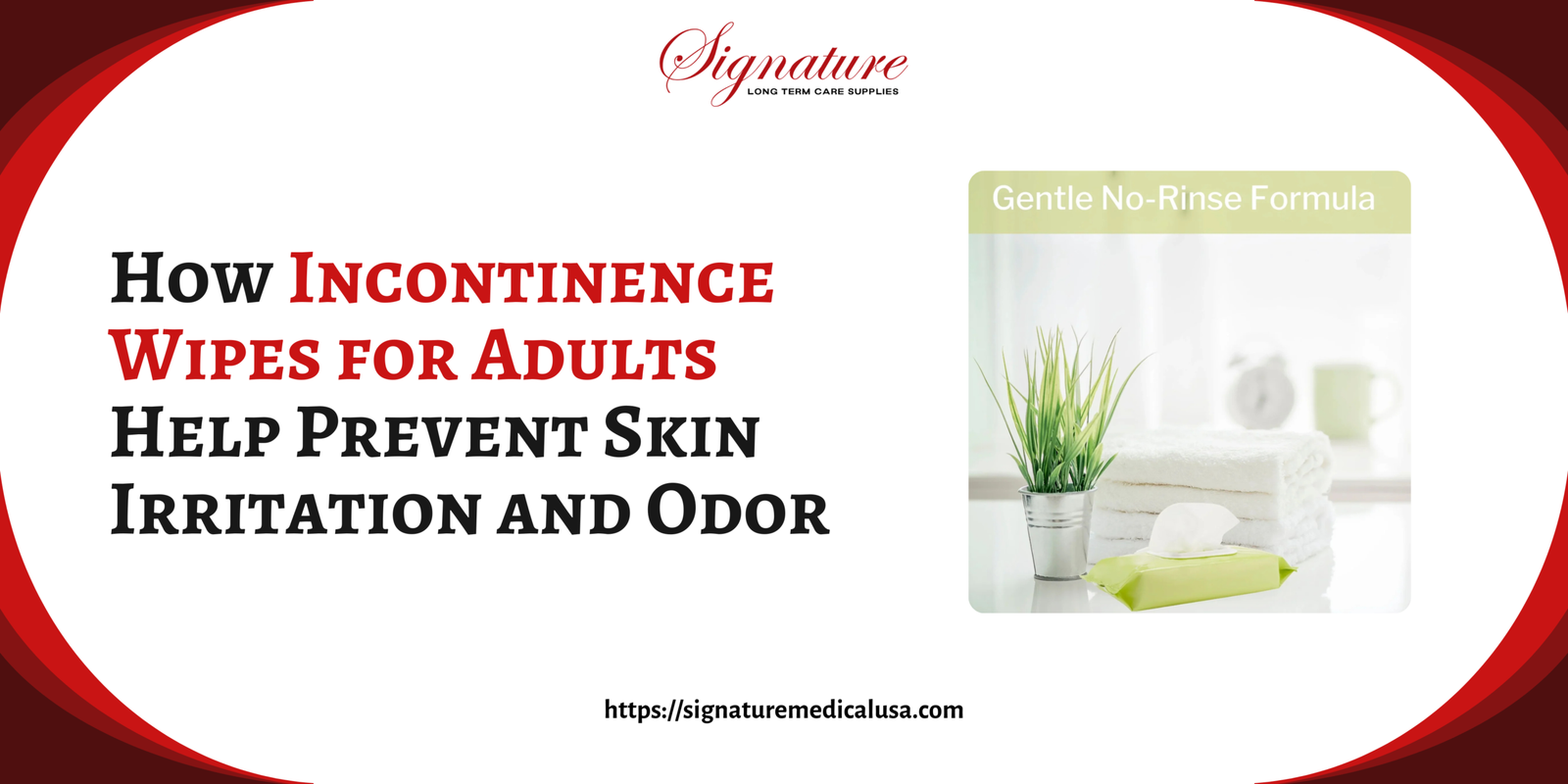
- Gentle pH-balanced formula – Good incontinence wipes are formulated to match or support the skin’s natural pH, helping to restore rather than disrupt the skin barrier.
- No harsh alcohol or fragrances – Many people assume that fragrance means cleaner, but synthetic fragrances and alcohol can dry out and irritate skin, especially with repeated use.
- Moisturizing ingredients – Many quality wipes include aloe vera, vitamin E, or similar skin-conditioning agents that leave a light protective layer on the skin after cleansing.
- Strong but soft material – The material needs to hold together during use without being abrasive. A wipe that tears or feels rough can cause micro-irritation that builds up over time.
How Wipes Help Manage Odor
Odor from incontinence comes primarily from bacteria breaking down urine and stool on the skin’s surface. The faster and more thoroughly the skin is cleansed, the less opportunity bacteria have to multiply and produce odor compounds.
Wipes for incontinence help manage this in two ways:
- Physical removal – They lift and remove urine, stool, and bacteria from the skin surface quickly and effectively.
- Residual protection – Some wipes include mild antibacterial or odor-neutralizing ingredients that help reduce bacterial activity after cleansing, not just during it.
It’s worth noting that strong deodorizing sprays or heavily perfumed products may mask odor temporarily but can irritate sensitive skin with regular use. A quality wipe used consistently is a more balanced approach.
When to Use Incontinence Wipes
For anyone managing urinary or fecal incontinence, wipes should be part of every cleansing routine — not just an occasional convenience.
Recommended times to use them:
- Immediately after each incontinence episode, before changing a brief or pad
- During routine hygiene care, such as morning and bedtime routines
- When access to a sink or shower isn’t immediately available
- During travel, outings, or periods when a full wash isn’t practical
For people with limited mobility or those in long-term care settings, wipes for incontinence often serve as the primary cleansing method between bathing days. In these cases, choosing a high-quality, large-format wipe is especially important.
Choosing the Right Wipes: What to Look For
With so many options on the market, it helps to know what actually matters. Here’s a practical checklist:
Size
Look for wipes labeled “large” or “extra large” typically wider and longer than standard personal wipes. More surface area per wipe means fewer passes, which is gentler on already-sensitive skin.
Thickness and Durability
A wipe that holds together during use is essential. Look for multi-layer construction or descriptions like “heavy duty” or “extra thick.”
Formula
- Alcohol-free
- Fragrance-free or lightly scented with skin-safe ingredients
- pH-balanced
- Enriched with moisturizers (aloe, glycerin, or vitamin E are common)
Flushable vs. Non-Flushable
Most incontinence wipes should not be flushed, regardless of what the label says. As a general rule, dispose of all wipes in a trash receptacle. Most home plumbing systems simply aren’t built to handle them, and even “flushable” varieties can cause blockages over time.
Packaging
For daily use, resealable packaging helps keep wipes moist between uses. Individually wrapped wipes are useful for travel or on-the-go situations.
A Note on Skin Barrier Products
Wipes clean the skin, but they’re often most effective when paired with a skin barrier cream or protective ointment. After cleansing with an incontinence wipe, applying a thin layer of a zinc oxide cream or dimethicone-based barrier cream helps protect the skin between cleansings.
This combination gentle cleansing wipe followed by a barrier product is the standard approach recommended by wound care and continence nurses for preventing IAD in high-risk individuals.
If someone is already experiencing redness or skin breakdown, it’s a good idea to speak with a healthcare provider. Wipes and barrier products can maintain healthy skin, but existing irritation or wounds may need additional treatment.
Tips for Caregivers
If you’re providing incontinence care for a family member or patient, a few practical habits make a real difference:
- Change briefs promptly. Even a short time in wet or soiled briefs increases skin risk. Wipes make quick changes easier.
- Pat, don’t rub. When using a wipe, gentle patting or single-direction strokes are less irritating than back-and-forth rubbing.
- Let skin air dry briefly. If possible, allow the skin to air for 30–60 seconds before applying a barrier product or putting on a fresh brief.
- Keep wipes within easy reach. Having supplies close to where you change briefs reduces the time between soiling and cleansing.
- Check skin regularly. Look for early signs of irritation, redness, warmth, or broken skin, especially in skin folds and areas in contact with brief edges.
The Bottom Line
Managing incontinence well comes down to consistent, gentle care and the right wipes are a practical part of that routine. They help remove irritants quickly, support skin health, and reduce odor without harsh chemicals.
Whether you’re caring for a loved one at home or managing incontinence yourself, choosing the right incontinence wipes for adults is one of those small decisions that adds up to a meaningful difference in comfort and skin health over time.
We carry a range of incontinence and long-term care products selected for quality, skin compatibility, and everyday practicality. If you have questions about which products are right for your situation, feel free to reach out — we’re happy to help you find what works.